

Best Turntables for Classical Music Enthusiasts: Detailed, Dynamic, Warm Sound from Your Records
If you love classical music on vinyl, the best turntables for classical music enthusiasts help you hear deep detail, natural tone, and real concert‑hall dynamics from your records. You hear the texture of strings, the weight of timpani, and the space around soloists instead of noise and pitch wobble. With a well chosen deck, a smart cartridge match, and a bit of setup care, your favorite symphonies and chamber records start to sound closer to a live performance.

What matters for classical on vinyl
You listen for texture in strings, clear separation in big tuttis, and stable pitch in long held notes. Classical exposes weak speed control, noisy bearings, and harsh cartridges very quickly. So you want:
- Solid speed stability at 33 rpm
- Low mechanical noise and vibration
- A tonearm that tracks inner grooves cleanly
- A cartridge that stays smooth in the upper midrange
Because you already own an amp, you can choose either built‑in or separate phono stage. Models with a phono switch give you flexibility if you upgrade later.
Key specs to watch
When you skim product pages, watch for a few simple numbers and design points. These say a lot about how a deck will handle classical.
- Wow and flutter below about 0.2 percent for solid pitch.
- Signal to noise around 65 dB or better for a quiet background.
- A decent platter mass and damped plinth to reduce rumble and feedback.
- A tonearm with good bearings and adjustable tracking force and anti‑skate.
You also want a cartridge that can be upgraded easily. A removable or standard mount headshell makes your life easier as you swap and align carts.
Entry level: great first deck
These choices suit you if you want strong performance for classical without going deep into four‑figure prices.
Audio‑Technica AT‑LP5X
The AT‑LP5X is a manual direct‑drive table with USB and a built‑in phono stage, which makes it easy to drop into your current system. The low‑torque motor and external power supply help reduce noise, and the J‑shaped arm with detachable headshell suits cartridge swapping.
For classical, the included AT‑VM95E cartridge gives you good tracking and a neutral balance, though you can move up the VM95 stylus range for more refinement. Speed options cover 33, 45, and 78, so you can play historical recordings as well as modern pressings.

- Direct-drive, low noise motor
- Fully manual operation with three speeds: 33-1/3, 45 and 78 RPM
- AT-VM95E Dual Moving Magnet stereo cartridge (black) with replaceable stylus
Fluance RT85
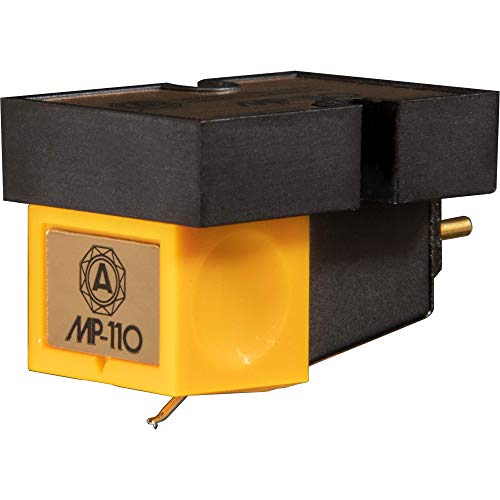
The Fluance RT85 uses a belt‑drive design with an acrylic platter and a well damped plinth, which helps keep mechanical noise low. It ships with the Nagaoka MP‑110 cartridge that is known for a smooth midrange and forgiving treble, good for strings and woodwinds.
Reviewers praise the RT85 for strong value and a quiet, stable presentation that suits detailed listening. For you, it gives a serious classical front end right out of the box, while still allowing later cartridge upgrades.

- PURE ANALOG PERFORMANCE – The definitive vinyl record listening experience for beautifully warm and natural music, trans…
- SPECTACULAR MUSICAL ACCURACY – Immerse yourself in the detailed high resolution sound of the Ortofon 2M Blue elliptical …
- HIGH DENSITY ACRYLIC PLATTER – The greater mass of the acrylic platter damps unwanted vibrations resulting in a more 3-d…
Midrange: serious listening
If you want more refinement, better tonearms, and lower noise, these models are strong midrange picks that still show up on Amazon.
Rega Planar 1 and Planar 1 Plus
The Rega Planar 1 is a simple belt‑drive deck with a 24 V low‑noise motor, a phenolic platter, and the RB110 tonearm with low friction bearings. It comes with the Rega Carbon cartridge installed and preset, which keeps setup fast.
The Planar 1 Plus adds a factory phono stage inside the plinth, so you can go straight into a line input on your amp and upgrade to a separate phono later if you like. For classical, the Rega sound has good timing and an open midrange, though many owners later upgrade the cartridge for finer detail.
Pro‑Ject Debut Carbon EVO
The Debut Carbon EVO gives you a heavier steel platter with damping, a carbon fiber one‑piece tonearm, and improved feet for better isolation. The supplied Sumiko Rainier cartridge has a smooth tonal balance and tracks cleanly at standard forces.
Specs show wow and flutter around 0.17 percent and signal to noise near 68 dB, which suits long orchestral sides. For you this means more stable pitch on strings and cleaner inner groove playback on late symphonic movements.
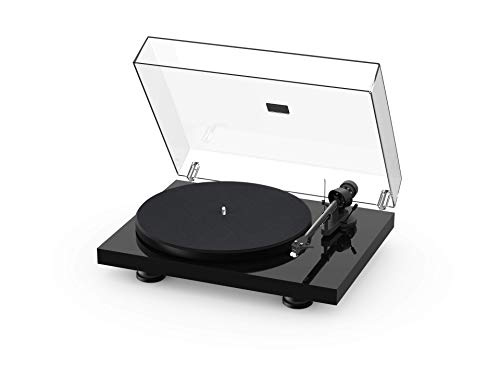
- 8.6″ one-piece Carbon Fiber tonearm, integrated headshell
- Electronic Speed Selection for 33&45 RPM (78 capable)
- Low-friction precision sapphire tonearm bearings

Upper tier: long term reference
If you want a turntable that can live in your system for many years and handle high‑end cartridges, you can move into this tier.
Technics SL‑1500C
The SL‑1500C is a coreless direct‑drive table with a built‑in phono stage and an auto lift function at the end of a side. The direct‑drive motor delivers very stable speed with low wow and flutter, and the S‑shaped arm is designed for accurate tracking.
For classical, the Technics platform shines with pitch stability and noise performance, which makes string tone and piano lines sound steady. You can bypass the internal phono stage later and feed a better one, and the standard mount headshell lets you rotate different cartridges easily.
Higher‑end belt drives
Above this level you move into more specialist decks from Rega, Pro‑Ject, and others, many of which also show up on Amazon in various packages. At that point the core ideas stay the same: a quiet plinth, accurate bearing, solid arm, and a good cartridge for classical.
Cartridge picks for classical
Because you are comfortable aligning cartridges, you can shape the sound a lot without changing the turntable. For classical, you usually want:
- Clean tracking at 1.8 to 2.2 grams
- Line contact or advanced elliptical tips for better inner groove performance
- A tonal balance that avoids harsh violins
Popular moving magnet options for classical listeners include the Audio‑Technica VM95ML and VM540ML, along with the Nagaoka MP‑110 and higher models. Microline and similar fine contact profiles help keep inner groove distortion low on long symphonies and concertos.
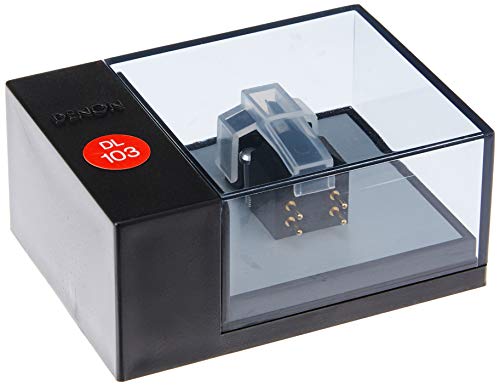
If your amp can handle moving coil later, options like the Denon DL‑103 variants or entry‑level MCs from Audio‑Technica offer more detail and dynamics, but they need a suitable phono stage. For now you can get a long way with a good MM cartridge mounted carefully.

Phono stage options
Your phono stage affects noise floor, dynamics, and tonal balance as much as the table. Many turntables above include or offer a phono option, but external stages can give cleaner gain and better loading choices.
For classical, look for:
- Gain suited to your cartridge output so you do not run the amp volume at extremes
- Input capacitance and resistance that match MM or MC recommendations
- Low noise op‑amp or discrete designs, often published as very low equivalent input noise
Entry to midrange options from brands like Schiit, Rega, Pro‑Ject, and others show up on Amazon and offer clear, quiet performance for classical listening.
Setup basics for better classical sound
You already swap and align cartridges, so you know setup matters. For classical the stakes are higher because inner grooves and wide dynamics punish sloppy alignment.
Level, support, and placement
Start with a rigid, level surface. A simple wall shelf or a solid rack shelf away from subs and big speakers works best. Use the built‑in feet and adjustment if the table offers it, or shim under the shelf until the platter is flat in all directions.
Keep the turntable away from strong air movement and direct speaker output, which can cause feedback during loud passages. Many listeners find that placing the table off to the side, on its own support, tightens bass and reduces rumble.

Cartridge alignment and tracking
Use a proper two‑point protractor suited to your arm length and alignment standard. Spend time on overhang and cantilever angle so the stylus sits straight in the groove. Check vertical tracking force with a digital gauge rather than trusting only the arm dial.
For most modern MMs aim around the middle of the manufacturer’s recommended range. Slightly higher tracking force often reduces distortion and noise with classical pressings, as long as you stay within spec. Set anti‑skate to match tracking force, then fine tune by listening to inner groove passages for left‑right balance.
VTA, azimuth, and anti‑skate
If your arm allows vertical tracking angle and azimuth adjustment, set the arm tube roughly parallel to the record and the headshell vertical to the record surface. Then listen to solo violin, oboe, or soprano to refine.
Small shifts in VTA can tighten highs or fill out the midrange, while azimuth tweaks change channel balance and focus of the stereo image. You can use test records and measurement tools later, but careful listening on familiar classical sides works well.
Managing noise and static
Classical records often have quiet passages, so noise handling matters a lot. Simple habits pay off more than exotic accessories.
- Wet clean used and new records with a decent cleaning kit or vacuum / ultrasonic system if budget allows.
- Use a carbon fiber brush before each play to remove dust and reduce static.
- Replace inner sleeves with anti‑static ones to keep cleaned records clean longer.
Check that the turntable ground wire connects firmly to your amp or phono stage ground post to avoid hum. If you still hear low hum, move signal and power cables apart and avoid running them parallel for long lengths.
Matching amp and speakers
Because you already own an amp, you only need to confirm input type and gain. If your amp has a phono input that matches MM or MC, you can bypass built‑in stages on the turntable. If it only has line inputs, choose a turntable with a switchable phono stage or budget for a separate phono box.
For classical you usually want speakers with good midrange accuracy and clean off‑axis response, along with a room setup that gives you depth and width. Turntable upgrades will be easier to hear if your speakers and room are reasonably sorted.
Putting it together
You now have a clear path. Pick one of these turntables that fits your budget, add a well matched cartridge, and spend a little time on setup; your classical records will repay you with more detail, better dynamics, and warmer tone than you might expect. Once you hear a favorite symphony or string quartet on a quiet, well tuned deck, it becomes hard to go back to casual listening.


