

Vinyl Care Beyond Cleaning: Restoring Warped Records and Damaged Sleeves
Vinyl records offer audio warmth you can’t get anywhere else. But over time, your records and their sleeves will need more than cleaning to keep playing and looking good. Warped records affects sound quality, and worn or torn album jackets can devalue your collection. This article covers practical DIY fixes and modern tools to restore warped records and repair vintage jackets safely—preserving your music for good.

Restoring Warped Records
Warped records lose their flatness and cause skips or distortion. Fixing warps involves carefully reshaping the vinyl. There are three main ways:
- Heat and Pressure Flattening
This method uses controlled warmth and weight. You sandwich your record between two clean, flat glass panes and gently heat it in an oven set at about 100 to 120 degrees Fahrenheit. The warmth softens the vinyl. You then leave the record under weight to flatten it slowly. Timing is key—too hot or too long can ruin your record. Use an oven thermometer and never exceed 120°F. Cool it slowly before playing.
This method offers solid results for mild to moderate warps but carries risks if not done carefully. Avoid if your record is very valuable or fragile.
- Pressure Only Flattening
If you’re wary of heat, place your record between flat boards or heavy books and leave it for weeks. This gently flattens the record without any risk from heat. It’s safe but slow and not guaranteed to fix severe warps. Check occasionally to avoid uneven pressure marks. - Vinyl Flattening Machines
These machines apply precise heat and pressure, designed to safely fix warps with little user guesswork. Prices range from budget $250 models (like Vinyl Flat) to high-end $1,000+ units (ORB, Furutech). They’re the best choice if you have lots of warped records or rare, valuable vinyl.
How to Prepare for Flattening
- Always clean your record first to remove grime that could scratch grooves.
- Use microfiber cloths and vinyl-safe cleaning fluids.
- Place a soft cloth or felt between your record and glass pane if DIY heating to avoid scratches.
- Monitor heating times and temperatures carefully.

Repairing Vintage Album Jackets
Your record covers protect the vinyl and preserve its value. Old jackets can have tears, edge wear, or water damage. Here’s how to repair and protect them:
- Fix tears inside the jacket with acid-free, double-sided archival tape to avoid sticky residue on the outside.
- Reinforce fragile edges with thin greaseproof paper glued inside the seams; it prevents further tears.
- Use pH-neutral archival glue for spine or corner repairs, applied sparingly.
- Let water-damaged jackets dry flat under light weight; avoid direct sunlight to prevent warping or discoloration.
- Store jackets upright, not stacked, and slip them into protective plastic sleeves.

- SUPERIOR RECORD PROTECTION guards record collections, protecting your priceless vintage records, album covers and art wo…
- PREMIUM QUALITY 3 Mil. thickness polyethylene, the industry-leading design, is thicker than standard record covers, prov…
- PERFECT FIT outer sleeves measure 12.75” x 12.5” are optimally designed, with flush cut opening, to fit single LP, doubl…
Long-Term Preservation Tips
- Keep records away from heat, sunlight, and damp places to reduce warping and sleeve deterioration.
- Store records vertically to avoid pressure marks.
- Use anti-static inner sleeves for vinyl and durable outer covers for jackets.
- Handle all parts with clean, dry hands.
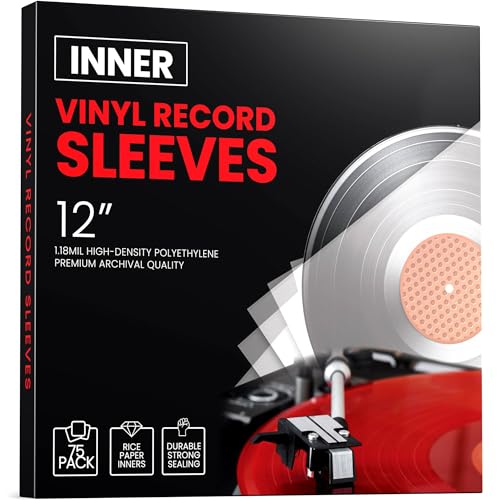
- Protect Your Favorite Albums: Your precious vinyl records are in safe hands with this inner rice vinyl sleeves! Durable …
- Premium Archival Quality: Made with durable, high-density polyethylene, these rice paper album sleeves for vinyl records…
- Outstanding Protection: Thanks to their anti-static and durable material, the album holders for vinyl records protect ag…

Additional Vinyl Care Advice
Cleaning is the first defense against damage. Use a mix of 80% distilled water and 20% isopropyl alcohol with a microfiber cloth. Wipe gently from the outer edge inward along the grooves. Avoid household cleaners or tap water, which can harm vinyl.
For minor scratches, the wood glue method can sometimes lift dirt out of grooves: spread a thin layer of white wood glue, let dry, then carefully peel it off. Kits exist for vinyl scratch repair but use cautiously to avoid further damage.
Sanding damaged records is risky and only recommended in extreme cases by experienced hobbyists. It removes surface scratches but can dull the record and permanently alter grooves.

Tools and Products to Get
- Oven thermometer for accurate temperature control.
- Two flat glass panes for DIY flattening.
- Archival acid-free tapes and glue for sleeves.
- Protective plastic sleeves—both inner for vinyl and outer for jackets.
- Soft microfiber cloths.
- Vinyl flattening machines like Vinyl Flat for serious collectors.
Keep Your Collection Sounding and Looking Its Best
Restoring warped records and repairing vintage sleeves takes patience but pays off. Your vinyl will sound clearer and your collection will hold its value longer. Take your time with DIY methods if you choose to try them, but don’t hesitate to invest in proper tools when needed. Protect your records with good storage, handling, and cleaning habits. This balanced approach offers practical ways to go beyond cleaning and truly care for your vinyl collection.


