

How to Listen to Vinyl Records with Headphones: Complete Setup Guide for Analog and Digital Gear
Listening to vinyl records with headphones gives you detail, focus, and late-night volume that speakers often cannot. You just need the right signal chain from your turntable to your ears and a clear plan for how you want to listen.
The basic signal chain
To understand how to listen to vinyl records with headphones, start with the signal path. Your turntable’s cartridge sends a tiny phono signal that must pass through a phono preamp, then a headphone amp, then your headphones.
In most setups the chain looks like this: turntable → phono preamp (built-in or external) → headphone amp → headphones. Many modern turntables already include a phono preamp, so you can feed a standard line-level signal straight into a headphone amplifier.
Do you need a phono preamp?
If your turntable has “PHONO/LINE” or “preamp on/off” on the back, you already have a built-in phono stage. Set that switch to “LINE” when you go into a headphone amp that expects a regular line input.
If your turntable does not have a built-in preamp, you need an external one before any headphone amp or powered device in the chain. A phono preamp boosts the tiny cartridge output to line level and applies RIAA equalization so the record sounds balanced.

When you can plug headphones straight into a turntable
Some all-in-one decks and a few compact models give you a dedicated headphone jack on the front or side. With these, you can plug in directly and adjust the level with the built-in volume control.
For example, the LP&No.1 is a fully automatic turntable that comes with wired headphone output. You connect power, place it on a stable surface, plug your headphones into the headphone jack, and you are ready to listen in seconds.

- Vintage All-in-One record player with Modern Compatibility Design: The design of the turntable blends retro elements wit…
- High-Quality Die-cast Aluminum Platter with AT Cartridge: The vinyl payer utilizes a high-quality die-cast aluminum plat…
- Wireless Record Player & RCA Interface: It supports BT transmission and reception, enabling wireless connection to BT sp…

Using a turntable with line-out only
Most standalone turntables give you RCA outputs marked either PHONO or LINE. If you see LINE, the signal has already been through a phono preamp and can go into any line-level headphone amp or DAC/headphone amp combo.
You run a simple chain: RCA out from your turntable into the RCA or 3.5 mm input of your headphone amp, then plug your headphones into that amp. This “vinyl headphone setup” keeps things simple and works well for casual and serious listening.
Adding an external phono preamp
If your turntable only has PHONO outputs, add a dedicated phono stage between the deck and your headphone amp. The chain then becomes turntable → phono preamp → headphone amp → headphones.
An external phono preamp can give you lower noise, better channel balance, and cartridge loading options compared with many built-in stages. This is a smart upgrade if you are using revealing headphones and you care about separation and dynamics.
Why you need a headphone amp
Most turntables cannot drive headphones directly because they output either a low phono signal or a fixed line-level signal that is too weak for most cans. A headphone amp adds proper voltage and current to control the drivers in your headphones and gives you precise volume control.
You get tighter bass, more stable imaging, and better control at low volumes when you pair a good headphone amp with vinyl. It also lets you match gain to your headphones, so you avoid background noise with sensitive models and clipping with harder-to-drive ones.

- High Signal-To-Noise Ratio and Excellent Sound Quality: The NEOHIPO TP10 Phono Preamp delivers pristine sound quality wi…
- Multi-Interface Output for Various Needs: The TP10 turntable amplifier offers both RCA and 3.5mm headphone outputs, ensu…
- RIAA-Compliant, Lossless Fidelity: The NEOHIPO TP10 Phono Preamp for turntable adheres strictly to RIAA standards, guara…
Dedicated headphone amp vs combo units
When you look at how to listen to vinyl records with headphones, you will see two common types of devices: pure analog headphone amps and DAC/headphone amp combos. For vinyl, you only need the analog amp section, but combo units can still sound great when used with the analog input.
If your budget is tight, a compact DAC/amp with RCA or 3.5 mm line input gives you flexibility for both vinyl and digital sources. If you want the cleanest analog path from records, a straightforward analog headphone amp fed by a good phono stage is hard to beat.
Example wired vinyl headphone setups
You have a few common “vinyl headphone setup” paths:
- Turntable with built-in preamp → budget headphone amp → wired headphones.
- Turntable without preamp → external phono preamp → headphone amp → wired headphones.
- Turntable with headphone jack → wired headphones straight into the deck.
All of these can work well once you match gain correctly and keep cable runs short and tidy.
Using Bluetooth headphones with vinyl
If you want freedom to move, you can listen to vinyl through Bluetooth headphones by using a Bluetooth turntable or adding a Bluetooth transmitter. The turntable either has Bluetooth built in or feeds a small transmitter that sends audio to your wireless headphones.
On the wireless side, something like the Sony WH-1000XM5 or Sennheiser Momentum 4 Wireless works well for casual vinyl sessions from a Bluetooth turntable or transmitter. You get strong noise cancellation and good sound quality for background listening, then you can still switch to a wired pair like the ATH-M50x or HD 560S when you want to hear every detail from your records.
Bluetooth adds a little latency and compression, but modern codecs still sound good for casual listening. This “wireless vinyl headphone setup” is handy if you share a space or do not want cables across the room.


Turntables with built-in Bluetooth
Many compact and entry-level decks now ship with Bluetooth transmitters. These let you pair wireless headphones or Bluetooth speakers directly from the turntable with no extra hardware.
Models with Bluetooth often also include a built-in phono preamp and line-out, so you can use both wired and wireless listening paths from the same deck. That flexibility is useful if you split your time between quiet headphone sessions and casual speaker listening.
Headphone out on all-in-one systems
Some record players come as all-in-one units with speakers and a headphone jack on the front panel. These are easy for quick listening but usually trade off sound quality, isolation, and upgrade options.
If you already own one, plug your wired headphones into the front output and keep the volume low as you start. If you plan to build a vinyl headphone setup from scratch, you are usually better off with a separate turntable and simple headphone amp instead.
Gain staging and volume control
When you listen to vinyl records with headphones, gain staging matters. You want the phono preamp to output a healthy line-level signal into the headphone amp so you can run the volume in a comfortable mid position.
If your headphone amp has gain settings, start on low gain for sensitive headphones and medium or high for high-impedance or planar models. Avoid running everything at maximum to reduce noise and distortion and give yourself headroom.
Matching headphones to vinyl listening
Open-back headphones are popular for home vinyl listening because they give you an airy, speaker-like presentation. Closed-back models isolate better and work well if you share your space or listen in noisy environments.
If you want a simple closed-back starting point, the Audio-Technica ATH-M20x gives you a balanced sound and decent isolation without burning your budget. When you want more punch and better build, the ATH-M50x is a proven step up that still plays nicely from modest headphone amps.
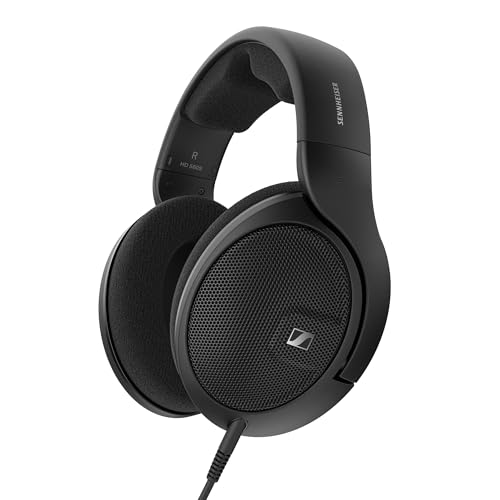
For a more open, speaker-like presentation, the Sennheiser HD 560S is a great first open-back choice, and the Sennheiser HD 600 is a long-term reference pick once your amp and phono stage are sorted.
Look for headphones that have a natural midrange, smooth but defined treble, and enough bass extension for your tastes. Comfortable pads and a stable headband matter because full album sides can run long.



Open-back vs closed-back for records
Open-back headphones leak sound into the room and let outside sound in, but they usually give you a wider soundstage. This suits jazz, classical, and live albums where you care about positioning and depth.
Closed-back headphones keep sound in and block more external noise, which is handy if you listen late at night or near others. They can sound a bit more intimate and direct, which many people enjoy for rock and electronic records.
Think of something like the Sennheiser HD 560S or HD 600 when you picture open-back vinyl listening: spacious, natural, and honest with good amps. For closed-back isolation, the Audio-Technica ATH-M50x or AKG K271 MkII keep sound in your head and out of your room while still sounding musical from a basic vinyl headphone setup.
Avoiding hum, buzz, and noise
Hum and buzz often show up in vinyl headphone setups because you sit closer to the noise floor than you would with speakers. Common causes include ground loops, poorly shielded cables, and cartridges picking up interference.
Start by making sure your turntable’s ground wire is connected to your phono preamp or amp if it has a ground terminal. Keep audio cables away from power bricks and wall warts, and use short, good-quality interconnects.

- Powerful Bass: TODN R-Series HiFi RCA cables feature 4-core 99.99% OFC conductor that delivers strong bass and rich deta…
- Stronger & More Stable: After many tests, we designed a premium ferrite bead at about 15cm from the plug, a location tha…
- Plug & Play: This high quality RCA cables male to male features corrosion-resistant 5μ 24K gold-plated pure copper plugs…
Grounding and cable routing tips
If you hear a steady 50/60 Hz hum that changes when you touch metal parts of your setup, that points to a grounding issue. Check that your ground wire is tight and that all plugs sit firmly in their sockets.
If the noise sounds like hiss, it may come from running gains too high or from the noise floor of your headphone amp. Lower the gain, turn down upstream devices, and listen again at a normal volume setting.
Using an AV receiver for headphone listening
If you already own an AV receiver or stereo amplifier with a headphone jack, you can route vinyl through that and plug your headphones into the amp. You connect the turntable (through a phono preamp if needed) to the receiver’s phono or line input.
Many receivers use a simple headphone stage that shares the main amplifier, but they can still sound decent and give you a remote volume control. This is a practical path if you are happy with your main system and just want headphone listening as an option.

Switching between speakers and headphones
Some headphone amps include line outputs or pre-outs that let you pass the signal on to powered speakers or a main amplifier. This way, you can route your turntable to the headphone amp first, then into your speaker chain, and switch listening modes as needed.
On a receiver, you usually mute the speakers when you plug in headphones, so you may not need any extra switches. In more complex setups, a simple line-level switch or monitor controller makes it easy to choose between speakers and headphones without constant cable swapping.
Using a DAC/headphone amp with vinyl
Many people already own a USB DAC/headphone amp for computer audio and want to reuse it for records. In that case, you use the device’s analog input (often RCA or 3.5 mm) and treat it as a regular headphone amp.
You run your turntable’s line output or your phono preamp’s output into that analog input. The DAC section sits idle, but you still benefit from the amp’s clean power, gain control, and headphone outputs.
Ideal “vinyl headphone setup” signal flow examples
Here are two simple signal flows you can copy:
- Built-in preamp deck: Turntable (LINE out) → RCA to headphone amp input → headphones.
- No-preamp deck: Turntable (PHONO out) → external phono preamp → headphone amp → headphones.
Both approaches are easy to expand later with better phono stages, new headphones, or a more powerful amp.
Protecting your hearing with vinyl and headphones
Vinyl sounds lively and dynamic in headphones, so it is easy to creep up the volume. Long sessions at high levels can still damage your hearing even if the sound feels smooth.
Keep the volume where you can hear detail and impact but still hold a conversation if needed when you take the headphones off. Take breaks between sides and listen for signs of fatigue like ringing or pressure in your ears.

Troubleshooting common vinyl headphone problems
If you hear distorted sound, first check tracking force and anti-skate on your turntable because mistracking shows up as harsh treble in headphones. Then confirm that your phono preamp is set for the correct cartridge type and gain.
If one channel is louder, check cartridge alignment, stylus condition, and cable connections. Noise that changes when you move cables usually points to electromagnetic interference, so re-route cables and keep them away from power bricks and routers.
A quiet finish to your vinyl sessions
You now know how to listen to vinyl records with headphones in a way that fits your gear, your space, and your listening habits. You understand the basic signal chain, how phono preamps and headphone amps work together, and the options you have for wired and wireless listening. With that sorted, you can focus on what matters most: dropping the needle, finding a comfortable volume, and getting lost in your records without bothering anyone around you.

